
Article: Androgenetic Alopecia (AGA)
Androgenetic alopecia (AGA): a deep dive into pattern hair loss
Pattern hair loss is the most common cause of hair thinning worldwide — affecting both men and women, and driven by genetics and hormone sensitivity rather than poor hygiene or product choices.
Contents
IntroductionWhat is androgenetic alopecia?What happens inside the follicleMen vs womenHow common is AGA?Common signsAGA vs telogen effluviumTreatment approachesSofia Hair Health: educational videosSofia Hair Health: personal journeyHairGrowthHub takeawayReferencesIntroduction
Androgenetic alopecia (AGA), commonly known as pattern hair loss, is the most prevalent cause of hair thinning in the world. It affects men and women across all ethnicities, becomes more common with age, and is driven by a combination of genetic predisposition and sensitivity to androgens — not by shampoo choice, wearing hats, or poor scalp hygiene.
AGA is progressive. Without intervention, hair follicles gradually miniaturize over months and years, producing finer, shorter hairs until — in some cases — visible hair is lost entirely in affected areas.
"By age 50, approximately half of men and a substantial proportion of women will experience some degree of androgenetic alopecia."
What is androgenetic alopecia?
AGA is a hereditary condition in which hair follicles are genetically sensitive to dihydrotestosterone (DHT), a hormone derived from testosterone. In susceptible individuals, DHT gradually shrinks — or miniaturizes — hair follicles over successive growth cycles. The result is thinner, shorter hairs and, over time, reduced visible hair density.
Three factors converge to produce AGA: a genetic predisposition (inherited from either parent), the presence of androgens, and the passage of time. The condition is not caused by excess androgen production in most people — the problem lies in how certain follicles respond to normal androgen levels.
→ See also: Hair loss overview
What happens inside the hair follicle?
The biological process behind AGA unfolds in stages. Each step makes the next harder to reverse — which is why earlier intervention generally produces better outcomes.
The enzyme 5-alpha-reductase converts testosterone into DHT in the scalp. DHT binds to androgen receptors in genetically susceptible follicles. Crucially, it is the follicle's sensitivity — determined by genetics — that matters most, not how much DHT is present in the bloodstream overall.
With repeated DHT exposure, each successive hair growth cycle produces a slightly thinner, shorter hair. The follicle's diameter decreases gradually. At this stage, hairs become less visible to the eye, though they are still growing.
Healthy follicles spend years in the active growth phase (anagen). In AGA, this phase shortens progressively — hairs cannot grow as long or develop as much diameter before cycling into the resting phase. The result is visibly thinner, shorter hair across the affected area. → Foundation nutrients
The thick, pigmented terminal hairs that give the scalp its visible coverage are gradually replaced by fine, lightly pigmented vellus-like hairs. To the observer, this reads as reduced density — the scalp becomes more visible even though follicles are still technically active.
Over years, follicles may still be alive but produce little or no visible hair. Research suggests that even highly miniaturized follicles often retain some viable cells — which is why early intervention, before extensive miniaturization occurs, generally produces better and more sustained outcomes.
Men vs women
AGA presents differently in men and women — in pattern, rate of progression, and the scales used to classify severity. Understanding these differences helps with accurate diagnosis.
- Receding hairline common
- Crown thinning common
- Classified using the Norwood scale
- Often begins in twenties or thirties
- Can progress to extensive baldness
- Frontal hairline usually preserved
- Widening part line common
- Classified using the Ludwig scale
- Often accelerates around menopause
- Rarely progresses to complete baldness
How common is AGA?
In men
AGA is the most common cause of hair loss in men. Prevalence increases steadily with age — it affects a minority of men in their twenties and the majority of men by their fifties and sixties. The progression varies widely between individuals.
In women
Female pattern hair loss is more common than is often assumed. A significant proportion of women experience some degree of AGA during their lifetime, with prevalence rising after menopause as protective hormonal effects diminish. The condition is often underreported because diffuse thinning is less visually obvious than the receding hairline seen in men.
Common signs of androgenetic alopecia
AGA typically develops gradually. The following are common early and mid-stage indicators:
Widening part line (common in women)
Temple recession (common in men)
Crown thinning or a visible patch forming
Reduced ponytail thickness over time
Increased scalp visibility in bright light
Hair becoming finer, shorter, or less pigmented
How is AGA different from telogen effluvium?
These two conditions are often confused because both involve noticeable hair loss. They differ significantly in cause, pattern, and prognosis.
- Progressive — worsens over years
- Follicle miniaturization is the mechanism
- Patterned loss (temples, crown, part line)
- Requires ongoing management
- Genetic and hormonal in origin
- Often sudden onset — weeks after a trigger
- Increased shedding across the whole scalp
- Diffuse, not patterned
- Often temporary and self-resolving
- Triggered by stress, illness, or deficiency
→ Read more: telogen effluvium
Treatment approaches
The following provides a brief overview only. This article does not constitute medical advice, and treatment decisions should be made in consultation with a qualified healthcare provider.
A vasodilator that prolongs the anagen phase and increases follicle size. Available without prescription in many countries. Suitable for both men and women.
Strong evidenceA 5-alpha-reductase inhibitor that reduces DHT at the follicle level. Prescription-only. Considered the most effective oral treatment for male AGA.
Strong evidenceA dual 5-alpha-reductase inhibitor that blocks more DHT than finasteride. Used off-label in some countries for more advanced AGA.
Moderate evidenceUses red light wavelengths to stimulate follicle activity. FDA-cleared for both men and women. Typically used as an adjunct, not a standalone treatment.
Moderate evidenceCorrecting deficiencies in protein, iron, vitamin D, and zinc supports the follicle environment. Deficiency correction alone does not reverse AGA but reduces compounding factors.
→ Foundation guideSaw palmetto and pumpkin seed oil show modest evidence for reducing DHT-related shedding. Effects are generally smaller than prescription options.
→ Supplement guideLimited evidenceSofia Hair Health: understanding AGA
The following videos from the @sofiahairhealth TikTok channel illustrate key educational concepts about androgenetic alopecia. They are included here as supporting examples, not as medical advice. Summaries are written in our own words.

This video walks through how DHT interacts with genetically susceptible follicles — a useful visual illustration of why the same hormone affects some scalp areas more than others.

This video covers the process of follicle miniaturization in accessible terms — explaining how hairs become progressively finer over successive growth cycles before becoming difficult to see.

This video addresses common misconceptions about AGA — including the belief that hair loss is caused by lifestyle choices rather than genetics and androgen sensitivity.
Sofia Hair Health's personal AGA journey
The following videos document one individual's personal experience managing androgenetic alopecia over time. They are shared here as a real-world perspective on the themes of consistency, patience, and long-term management. This content reflects one person's experience and should not be interpreted as a universal treatment plan.

Covers the process of getting an AGA diagnosis — illustrating how early confirmation of the cause shapes the treatment decisions that follow.
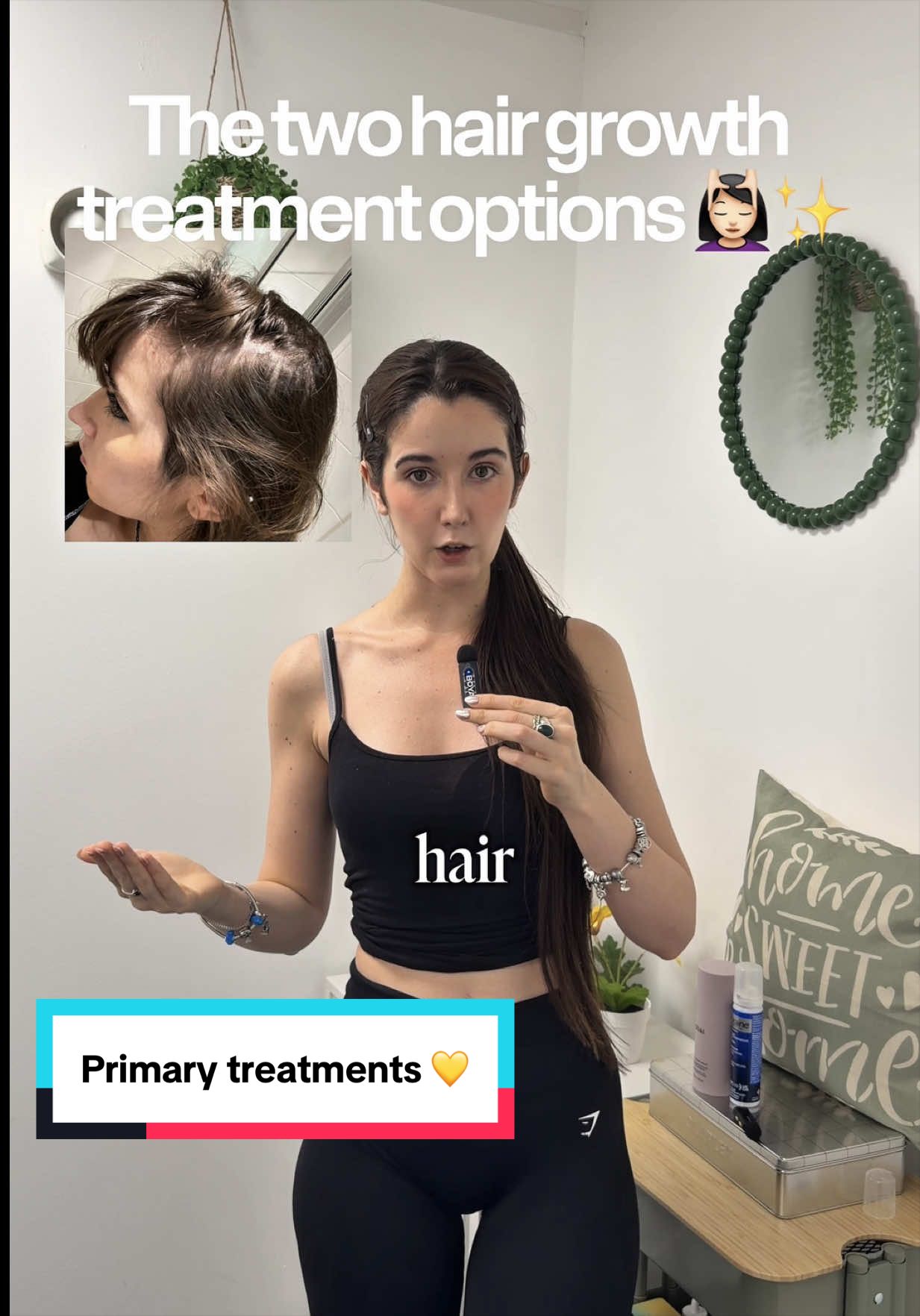
Discusses the importance of consistency in treatment — a recurring theme in AGA management, where results emerge over months rather than weeks.

Reflects on patience as part of managing AGA — setting realistic expectations about timelines and why visible improvement can take six months or longer.

Shares the longer-term perspective on living with AGA — emphasizing that management is ongoing rather than a one-time fix.
"Androgenetic alopecia is not a sign of poor health or poor hair care. It is a biologically driven condition involving genetics and follicle sensitivity to androgens. Understanding the process of follicle miniaturization is the first step toward making informed treatment decisions."
American Academy of Dermatology Association. Clinical practice guidelines on androgenetic alopecia. aad.org.
European Academy of Dermatology and Venereology. European consensus statement on diagnosis and management of female pattern hair loss. JEADV, 2022.
Ho CH, Sood T, Zito PM. Androgenetic alopecia. In: StatPearls. Treasure Island (FL): StatPearls Publishing, 2024.
Piraccini BM, Alessandrini A. Androgenetic alopecia. G Ital Dermatol Venereol, 2014. (foundational mechanism reference)
Nestor MS, et al. Treatment options for androgenetic alopecia: efficacy, side effects, compliance, financial considerations, and ethics. Journal of Cosmetic Dermatology, 2021.
Randall VA. Androgens and hair growth. Dermatologic Therapy, 2008. (foundational follicle miniaturisation reference)
Trüeb RM, et al. Androgenetic alopecia: an update of treatment options. Drugs, 2023.
Malkud S. Telogen effluvium: a review. Journal of Clinical and Diagnostic Research, 2015. (AGA vs TE differential reference)