
Article: Hair Growth Supplements and DHT Blockers — Evidence-Based Guide
DHT blocker supplements and hair growth supplements: what does the science actually say?
The supplement market for hair growth is crowded with bold claims and proprietary blends. This guide separates foundation nutrients from DHT blockers — and explains what the evidence actually supports.
Contents
Foundation nutrients Natural DHT blockers Popular brands What to prioritise Key takeaways FAQ ReferencesStart with the foundation first
Before considering DHT blockers, it’s important to ensure your hair follicles have the nutrients required for normal growth. Hair is one of the fastest-growing tissues in the body — nutritional deficiencies can contribute to increased shedding, slower growth, and weaker strands.
One of the most common nutritional causes of hair shedding, especially in women. Low iron is linked to telogen effluvium and reduced density. Test first.
Vitamin D receptors play an important role in follicle cycling. Supplementation helps only when a deficiency exists.
Involved in follicle function, protein synthesis, and cellular repair. Deficiency can contribute to hair loss and poor hair quality.
May support scalp health and inflammation regulation. Evidence is promising but still limited.
Heavily marketed, but deficiency is rare. Supplementation is most useful when a deficiency is present. More biotin ≠ more hair growth.
Natural DHT blockers
Dihydrotestosterone (DHT) is derived from testosterone via the enzyme 5-alpha-reductase. In genetically susceptible individuals, DHT contributes to follicle miniaturisation and progressive thinning — androgenetic alopecia. Prescription medications like finasteride have the strongest evidence for reducing DHT. Natural supplements attempt to influence the same pathway, but generally produce smaller effects.
Saw palmetto
Probably the most studied natural DHT blocker, saw palmetto is believed to partially inhibit 5-alpha-reductase activity. Clinical studies suggest modest improvements in hair shedding and density compared to placebo — generally less pronounced than finasteride, but well tolerated.
 NOW Foods Saw Palmetto
 Dense Hair Supplements
 Growplex Complex 10
Pumpkin seed oil
Pumpkin seed oil has gained popularity following several clinical studies. Proposed mechanisms include mild anti-androgen effects, anti-inflammatory properties, and antioxidant support. Some studies report improvements in hair count among men with androgenetic alopecia. More large-scale research is still needed.
 Pumpkin Seed Oil capsules
Dense Hair Supplements
Growplex Complex 10
Pumpkin Seed Oil capsules
Dense Hair Supplements
Growplex Complex 10
Pygeum
Pygeum africanum is frequently included in DHT-blocking formulas, often combined with saw palmetto and pumpkin seed oil. Research specifically for hair growth remains limited.
Nettle root
Marketed as a natural DHT blocker with potential interaction on androgen pathways and anti-inflammatory effects. Human hair-loss research remains limited.
Beta-sitosterol
A plant sterol included in several supplements for potential effects on androgen metabolism. Evidence specifically for hair growth remains relatively weak.
Sofia Hair Health’s perspective on natural DHT blockers
Sofia Sevilla, a content creator with androgenetic alopecia (AGA) and a background in trichology training, has discussed natural DHT blockers across several videos on her sofiahairhealth TikTok channel. Her approach offers a grounded, patient-perspective view that broadly aligns with what the published evidence suggests — while being candid about what supplements can and cannot realistically achieve.
On pumpkin seed oil
In content addressing whether pumpkin seed oil supports hair growth, Sofia takes a measured stance: she acknowledges the ingredient’s popularity and the presence of some encouraging clinical data, while stopping short of presenting it as a proven solution. Her key points, in summary, include that pumpkin seed oil may have relevance for DHT-related hair loss specifically — and is less likely to be helpful if androgenetic alopecia is not the underlying cause of shedding. This reflects what the clinical literature currently suggests: benefits are primarily proposed for the androgenic pathway, and evidence remains preliminary.
She also contextualises pumpkin seed oil within a broader supplement strategy rather than positioning it as a standalone intervention — a distinction worth noting for anyone researching this ingredient.
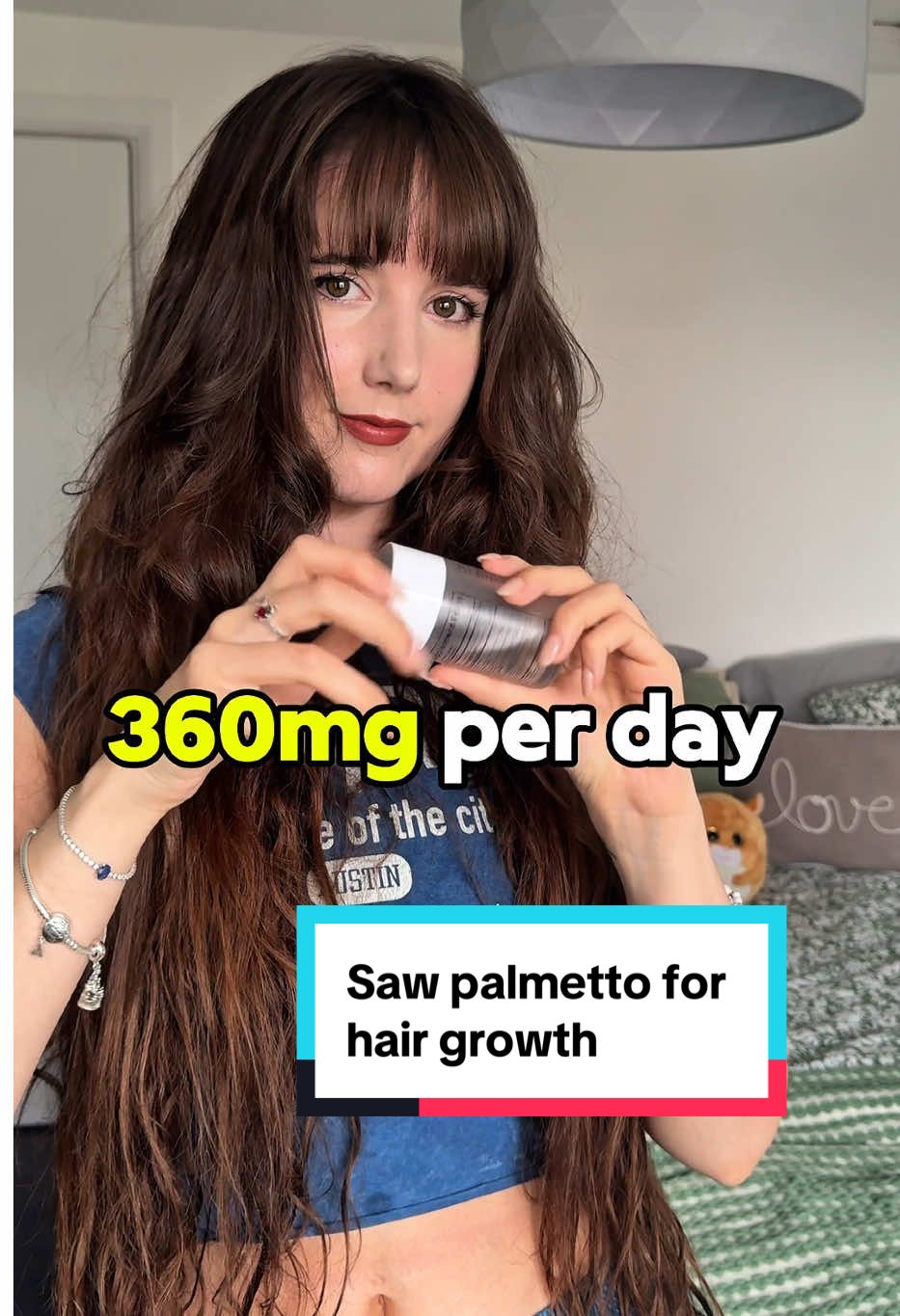
On saw palmetto dosage
Sofia’s content on saw palmetto addresses a question many people encounter: how much to take. Rather than endorsing a single approach, her discussion centres on the dosages used in clinical research and the practical consideration of selecting a product that delivers a consistent, meaningful amount. She notes her own daily intake in the context of an established supplement formulation, which is consistent with the 160–320 mg range most commonly examined in studies on saw palmetto and androgenetic alopecia.
Comments on her videos also surface the nuances worth flagging: some individuals report gastrointestinal sensitivity at higher doses, and those planning pregnancy should seek medical guidance before using saw palmetto, given its potential hormonal activity.


Popular hair growth supplement brands
Combines vitamins, minerals, and botanical extracts in a single formula. Convenient, but difficult to isolate which ingredient produces results.
A comprehensive hair-support formula with nutrients, botanical extracts, and DHT-focused ingredients. Check individual ingredient dosages carefully.
Offers standalone supplements — saw palmetto, pumpkin seed oil, zinc, biotin, omega-3. Greater dosing control than proprietary blends.
What works best? Evidence-based priorities
- Adequate protein intake — hair is protein; chronic deficiency slows growth.
- Correct iron deficiency, confirmed by blood test.
- Correct vitamin D deficiency, if present.
- Correct zinc deficiency, if present.
- Maintain overall nutritional adequacy before adding extras.
- If androgenetic alopecia is the concern, consider saw palmetto or pumpkin seed oil — with realistic expectations.
- Prescription options (finasteride, minoxidil) where appropriate and after medical consultation.
- Nutritional deficiencies — particularly iron, vitamin D, and zinc — can contribute to shedding and poor hair quality.
- Protein, iron, vitamin D, and zinc form the foundation of hair health. Start here.
- Saw palmetto has the strongest evidence among natural DHT blockers.
- Pumpkin seed oil shows promising clinical results but needs more large-scale research.
- Proprietary blends like Dense and Growplex Complex 10 make it difficult to isolate which ingredient is working.
- Natural DHT blockers generally produce smaller effects than prescription therapies.
FAQ
Does saw palmetto block DHT?
Saw palmetto is believed to partially inhibit 5-alpha-reductase, the enzyme that converts testosterone to DHT. Studies suggest modest improvements in hair shedding and density, though effects are less pronounced than prescription finasteride.
Is pumpkin seed oil effective for hair growth?
Some randomised trials report improvements in hair count for men with androgenetic alopecia. The evidence is promising, but more large-scale studies are needed before strong conclusions can be drawn.
Can vitamins regrow hair?
Vitamins alone won’t regrow hair unless a deficiency is the cause of loss. Correcting deficiencies — particularly iron, vitamin D, and zinc — can reduce shedding and support normal hair production.
Are hair growth supplements worth taking?
Foundation nutrients are worth correcting if deficient. DHT-focused botanical supplements may provide modest additional benefit for androgenetic alopecia, but expectations should remain realistic.
What is the best natural DHT blocker?
Saw palmetto has the most clinical evidence among natural options. Pumpkin seed oil is a close second. Both are generally well tolerated and are often found in combination formulas.
Wessagowit V, et al. The efficacy of Serenoa repens (Saw Palmetto) in androgenetic alopecia: a systematic review. Journal of Alternative and Complementary Medicine, 2023.
Cho YH, et al. Effect of pumpkin seed oil supplementation on androgenetic alopecia in men: randomised, double-blind, placebo-controlled trial. Evidence-Based Complementary and Alternative Medicine, 2014.
Almohanna HM, et al. The role of vitamins and minerals in hair loss: a review. Dermatology and Therapy, 2019.
American Academy of Dermatology. Clinical guidance on androgenetic alopecia and nutritional supplementation.
Dall’Oglio F, et al. Nutraceuticals and androgenetic alopecia: current evidence and future perspectives. Dermatologic Therapy, 2024.